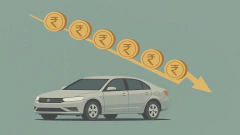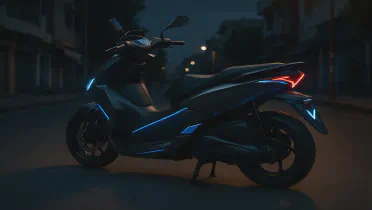


Every electric scooter brand in India runs the same line: 15 paise per kilometre. Some say 20 paise, some say 30. Next to a petrol scooter’s ₹2 or more per km, it looks like the argument is over before it starts.
That number is not a lie exactly. It is just the electricity bill, and the electricity bill is the smallest part of what an electric scooter costs you to run. Nobody selling you one counts the battery, and the battery is the single most expensive part on the vehicle. When it needs replacing, that is ₹45,000 to ₹1,20,000 depending on the model.
So we ran the maths properly, using the same cost model behind our Car Running Cost Calculator and web-verified battery replacement prices for July 2026. The short version is below, the full method is at the bottom, and every figure is an estimate you should sanity-check for your own city and riding.
The short answer
- Electricity alone really costs about 37 paise per km, not 15. The brands’ figure assumes cheap power and ignores charging losses.
- Add the battery and the honest range is ₹1.26 to ₹2.42 per km, depending on how big a battery you bought.
- A petrol scooter costs ₹2.30 to ₹2.76 per km including servicing.
- A sensible small-battery electric scooter still wins clearly, saving roughly ₹1,200 a month at 1,000 km a month against a Honda Activa. That is real money.
- A big-battery premium electric scooter barely wins at all. The TVS iQube ST works out at ₹2.42 per km against the Activa’s ₹2.46. That is a saving of about ₹37 a month.
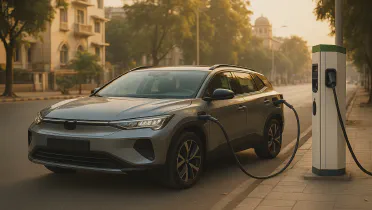
- If you cannot charge at home, the case weakens sharply. Public charging at ₹15 to ₹25 a unit costs 61 paise to ₹1.01 per km in electricity alone, before the battery.
The counterintuitive bit is worth saying plainly: buying the biggest battery is what kills the running-cost argument, because the thing you are paying to replace scales with the pack size while your daily 30 km ride does not.

Why 15 paise per km is not a real number
Two things get quietly left out.
Charging losses. The electricity that goes into the wall is not the electricity that reaches the wheels. Between the charger and the battery you lose roughly 10 to 15 percent. So a 3 kWh pack does not cost 3 units to fill, it costs closer to 3.4.
The price of a unit. Most of these claims assume ₹4 to ₹5 a unit. Domestic tariffs in India are slabbed, and charging a scooter every day pushes you up the slab. In Delhi the upper domestic slab is around ₹9 a unit. In Mumbai and Bengaluru it can be higher.
Work it at ₹9 a unit, a realistic 28 km per kWh in city riding, and 88 percent charging efficiency, and you get 37 paise per km. Already about two and a half times the advertised figure, and we have not touched the battery yet.
The bit nobody counts: the battery
An electric scooter’s battery is a consumable, like a clutch plate, except it costs as much as a used scooter. Warranties typically run 3 years or 30,000 to 50,000 km. Real-world life is generally quoted at 5 to 8 years or 50,000 to 80,000 km before the pack drops far enough in capacity that you replace it.
Here is what a replacement costs in 2026, by model:
| Scooter | Battery | Replacement cost |
|---|---|---|
| TVS iQube (standard) | 2.2 kWh | ₹45,000 to 50,000 |
| Ola S1 X | 2 kWh | ₹45,000 to 50,000 |
| Bajaj Chetak C2501 | 2.5 kWh | ₹55,000 to 60,000 |
| Ather Rizta S / 450S | 2.9 kWh | ₹60,000 to 65,000 |
| Ather 450X | 3.7 kWh | ₹70,000 to 80,000 |
| Bajaj Chetak 3501 | 3.5 kWh | ₹75,000 to 80,000 |
| Ola S1 Pro | 4 kWh | ₹85,000 to 90,000 |
| TVS iQube ST | 5.3 kWh | ₹1,15,000 to 1,20,000 |
Spread over 60,000 km, the midpoint of that life estimate, a ₹47,500 battery adds 79 paise per km. A ₹1,17,500 battery adds ₹1.96 per km, which is more than petrol costs an Activa rider.
“But I will sell the scooter before the battery dies.” Plenty of people will, and that is a fair point, but it does not make the cost disappear. It moves it into resale value instead: a used electric scooter with an ageing battery and no warranty left is discounted hard by buyers, which is exactly why EVs depreciate fastest in our 5-year cost-to-own study. You pay for the battery either at the service centre or at the sale. There is no third option.
The real cost per km, side by side
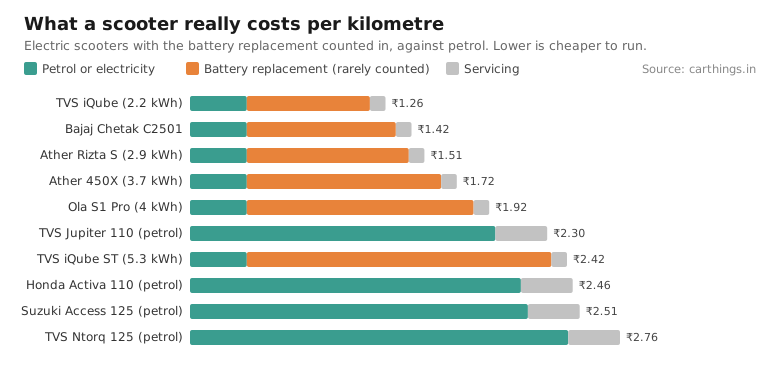
Electric scooters, with the battery counted:
| Scooter | Electricity | Battery per km | Servicing | Real cost per km |
|---|---|---|---|---|
| TVS iQube (2.2 kWh) | ₹0.37 | ₹0.79 | ₹0.10 | ₹1.26 |
| Bajaj Chetak C2501 (2.5 kWh) | ₹0.37 | ₹0.96 | ₹0.10 | ₹1.42 |
| Ather Rizta S (2.9 kWh) | ₹0.37 | ₹1.04 | ₹0.10 | ₹1.51 |
| Ather 450X (3.7 kWh) | ₹0.37 | ₹1.25 | ₹0.10 | ₹1.72 |
| Ola S1 Pro (4 kWh) | ₹0.37 | ₹1.46 | ₹0.10 | ₹1.92 |
| TVS iQube ST (5.3 kWh) | ₹0.37 | ₹1.96 | ₹0.10 | ₹2.42 |
Petrol scooters, at ₹102.12 a litre:
| Scooter | Real mileage | Petrol | Servicing | Cost per km |
|---|---|---|---|---|
| TVS Jupiter 110 | 52 kmpl | ₹1.96 | ₹0.33 | ₹2.30 |
| Honda Activa 110 | 48 kmpl | ₹2.13 | ₹0.33 | ₹2.46 |
| Suzuki Access 125 | 47 kmpl | ₹2.17 | ₹0.33 | ₹2.51 |
| Honda Activa 125 | 47 kmpl | ₹2.17 | ₹0.33 | ₹2.51 |
| TVS Ntorq 125 | 42 kmpl | ₹2.43 | ₹0.33 | ₹2.76 |
Mileage figures are the realistic city numbers we use across the site, matching our best scooters under ₹1 lakh guide, not brochure claims.
What you actually save each month
Against a Honda Activa 110 at ₹2.46 per km, riding 1,000 km a month:
| Electric scooter | Saving per km | Per month | Per year |
|---|---|---|---|
| TVS iQube (2.2 kWh) | ₹1.20 | ₹1,204 | ₹14,447 |
| Bajaj Chetak C2501 | ₹1.04 | ₹1,037 | ₹12,447 |
| Ather Rizta S (2.9 kWh) | ₹0.95 | ₹954 | ₹11,447 |
| Ather 450X (3.7 kWh) | ₹0.75 | ₹746 | ₹8,947 |
| Ola S1 Pro (4 kWh) | ₹0.54 | ₹537 | ₹6,447 |
| TVS iQube ST (5.3 kWh) | ₹0.04 | ₹37 | ₹447 |
Compare that against the ₹27,000 to ₹36,000 a year the brand blogs advertise. The saving is real, but it is roughly half what you are told at the top of the range and essentially nothing at the bottom.
And remember this is only the running cost. The electric scooter also cost you ₹20,000 to ₹40,000 more to buy in the first place. At ₹1,200 a month saved, that premium takes 17 to 33 months just to get even, and that is the cheap end of the electric range. Our Car Running Cost Calculator does exactly this break-even sum, and while it is built around cars the logic and the payback panel work the same way for a two-wheeler.
If you cannot charge at home, think again
This is the case the comparison articles skip entirely, and in Indian cities it is a very common one. If you live in a flat without a dedicated parking point, or your society will not let you run a cable, you are on public charging.
| Charging source | Rate per unit | Electricity per km |
|---|---|---|
| Home, domestic slab | ₹9 | ₹0.37 |
| Public charger, cheaper | ₹15 | ₹0.61 |
| Public charger, typical | ₹20 | ₹0.81 |
| Public charger, premium | ₹25 | ₹1.01 |
Add a mid-size battery’s ₹1.25 per km and you are at ₹2 to ₹2.36 per km on public charging, which is petrol scooter territory, with the added inconvenience of finding a working charger. Frequent DC fast charging also ages the pack faster, which pulls the replacement forward.
Straight verdict: if you have no home charging point, buy the petrol scooter. The economics stop working and you take on the hassle for nothing.
So who should actually buy electric?
Buy electric if you can charge at home, you ride 800 km a month or more, and you buy a small or mid-size battery. The TVS iQube standard, Ola S1 X, Bajaj Chetak C2501 and Ather Rizta S sit in the sweet spot: enough range for a city commute, a battery cheap enough to replace that the maths still works.
Buy petrol if you ride under 500 km a month, cannot charge at home, or regularly do long runs where you would be hunting for chargers. At 400 km a month even the best electric case saves under ₹500, which will never pay back the higher sticker price.
Skip the biggest battery unless you genuinely need the range for long rides. You are paying more upfront for a pack that costs more to replace, to carry capacity your 30 km commute never uses. It is the one choice that quietly cancels the entire reason you went electric.
If you are still shortlisting, our best scooters under ₹1 lakh guide covers both petrol and electric options with current prices, and the upcoming electric cars page tracks where the wider EV market is heading.
How we calculated this
Everything above is computed, not quoted. The assumptions:
- Petrol: ₹102.12 a litre, Delhi, verified 22 July 2026.
- Electricity: ₹9 a unit, the upper domestic slab. Cheaper slabs improve the electric case, and we have flagged where that matters.
- Charging efficiency: 88 percent, so a 12 percent wall-to-wheel loss.
- Electric efficiency: 28 km per kWh in real city riding, applied to every model for a like-for-like comparison. Optimistic riders will beat it, heavy riders will not.
- Battery life: 60,000 km, the midpoint of the commonly quoted 50,000 to 80,000 km. Battery replacement prices are July 2026 market figures.
- Servicing: ₹1,200 a year electric, ₹4,000 a year petrol, at 12,000 km a year.
- Not included: the purchase price difference, insurance (usually a little higher on electric), and depreciation. Those are covered separately in our cost-to-own study.
Prices, tariffs and battery costs change. Check the current numbers for your city and model before you commit.
FAQ
What is the real running cost of an electric scooter in India? About ₹1.26 to ₹2.42 per km once battery replacement, charging losses and servicing are included. The 15 to 30 paise per km figure quoted by brands is the electricity bill alone and leaves out the most expensive part.
Is an electric scooter really cheaper to run than a petrol scooter? Yes, but by less than advertised. A small-battery electric scooter costs about ₹1.26 per km against ₹2.46 for a Honda Activa, saving roughly ₹1,200 a month at 1,000 km. A large-battery model like the TVS iQube ST works out at ₹2.42 per km, which is almost identical to petrol.
How much does an electric scooter battery cost to replace in India? Between ₹45,000 and ₹1,20,000 in 2026, depending on pack size. A 2.2 kWh TVS iQube pack is ₹45,000 to 50,000, an Ather 450X 3.7 kWh pack is ₹70,000 to 80,000, and a 5.3 kWh TVS iQube ST pack is ₹1,15,000 to 1,20,000. Warranties usually cover 3 years or 30,000 to 50,000 km.
How long does an electric scooter battery last? Typically 5 to 8 years or 50,000 to 80,000 km before capacity drops far enough to need replacing. Frequent DC fast charging shortens this.
Is an electric scooter worth it without home charging? Usually not. Public charging at ₹15 to ₹25 a unit costs 61 paise to ₹1.01 per km in electricity alone, so with the battery included you land in petrol scooter territory while also having to find a working charger.
Which electric scooter is cheapest to run in India? The small-battery models. On our figures the TVS iQube standard (2.2 kWh) works out cheapest at about ₹1.26 per km, followed by the Bajaj Chetak C2501 at ₹1.42 and the Ather Rizta S at ₹1.51, because a smaller pack is cheaper to replace.