
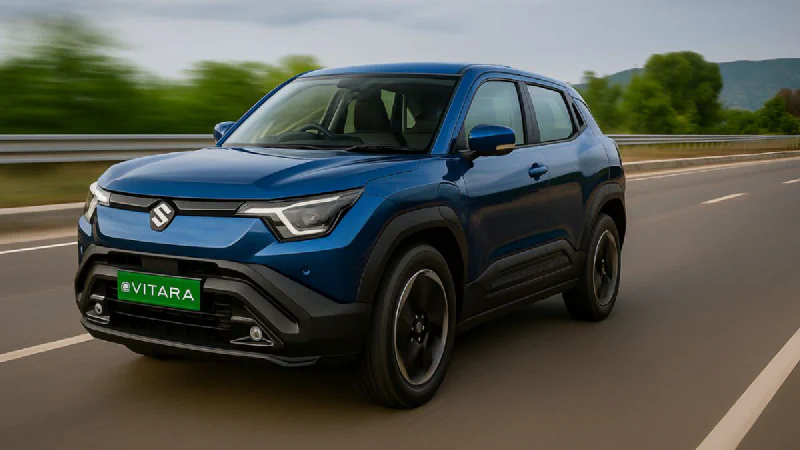
Maruti Suzuki’s e Vitara, the brand’s first-ever electric SUV, launched in India in February 2026. For a company that sells more cars than anyone else in the country, its first EV is a big moment, and a made-in-India one built at Maruti’s Gujarat plant. Here is the honest read on its price, range and whether it is the family EV to buy.
The Launch and What’s New
The e Vitara was first shown at the Bharat Mobility Global Expo before its February 2026 launch. It rolls out of Maruti’s Gujarat plant, which also builds it for export, so this is a properly high-volume car rather than a token EV. Bookings opened strongly across metros like Delhi, Bengaluru and Chennai.
It is not an import either. Built on tech shared with Toyota but tuned for our roads, this SUV is set up for Indian conditions, with ground clearance and suspension tuning aimed at broken tarmac and speed breakers rather than smooth highways.
Pricing That Fits the Family Budget

Maruti priced the e Vitara from ₹15.99 lakh ex-showroom for the base trim, up to about ₹20 lakh for the loaded top variant. There is also a battery-subscription plan (Maruti calls it Battery-as-a-Service) that drops the upfront price to ₹10.99 lakh, with a separate per-kilometre battery charge, useful if you want a lower sticker price and drive predictable distances.
- Base Delta (49 kWh battery): ₹15.99 lakh ex-showroom.
- Mid Zeta: around ₹17.49 lakh ex-showroom.
- Top Alpha (61 kWh battery): ₹19.79 to 20.01 lakh ex-showroom.
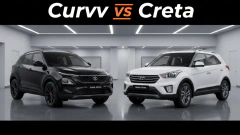
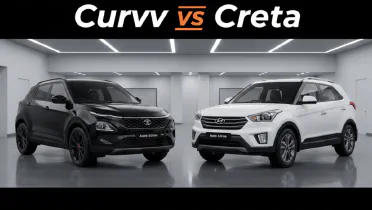
That undercuts or matches rivals like Tata’s Curvv EV and Hyundai’s Creta Electric, and Maruti’s 4,000-plus service centres mean support is rarely far away. Some states also add their own EV incentives, which lower the on-road cost further, so check what your state offers before you book.
Key stat: ex-showroom price starts at ₹15.99 lakh (or ₹10.99 lakh with the battery-subscription plan), with state EV incentives reducing the on-road cost in some states.
Impressive Range for Real Indian Drives
The e Vitara’s 61 kWh battery has a claimed range of up to 543 km per charge, so expect roughly 400 to 450 km in real-world traffic with the AC running. The 49 kWh option is rated around 440 km, still comfortable for daily commutes and weekend trips.
Its 171 bhp motor and 192 Nm of torque take it from 0-100 kmph in under 9 seconds, quick enough for confident highway overtakes. Fast charging gets the battery to 80 percent in about 30 minutes on a 100 kW DC charger, and with over 10,000 public charging points across India now, longer drives are far more workable than they were even two years ago.
Features Packed for Everyday Comfort
The equipment list is genuinely strong for the price. You get a 10.1-inch touchscreen with wireless Android Auto and Apple CarPlay, a 10.25-inch driver’s display, and ventilated front seats, which count for more than a sunroof in an Indian summer. The rear seats slide and recline, which makes a real difference to comfort on long family trips.
Safety is properly covered too: six airbags including a driver’s knee airbag, electronic stability control and hill-hold assist. Boot space works out to roughly 400 to 600 litres depending on how you set the 40:20:40 split rear seats, enough for a full family’s luggage.
Why the e Vitara Matters
The price is the point. Starting at ₹15.99 lakh ex-showroom (or ₹10.99 lakh on the battery-subscription plan), it sits within reach of families who would otherwise buy a petrol SUV at the same budget. Running costs work out to roughly ₹1 to 2 per km on home charging, a fraction of what a comparable petrol car costs per kilometre, and the 8-year battery warranty takes most of the long-term worry out of the decision.
With Maruti’s volumes and 4,000-plus service centres behind it, the e Vitara puts real price pressure on the Tata Curvv EV and the Hyundai Creta Electric. If you have been waiting for a mainstream, no-drama electric SUV from a brand with a workshop in every town, this is the one to test drive first.
Still deciding between buying now and waiting? See where the e-Vitara sits against everything still to come in our guide to the upcoming electric cars in India 2026.