
The TVS Apache RTR 160 is one of the most familiar names in India’s 160cc commuter-performance class, and the questions buyers actually ask about it are practical ones. What mileage does it really return? Is it comfortable enough for a daily grind? Can it handle the occasional long ride? This review pulls together TVS’s own figures, the bike’s specs, and long-term owner reports from forums like Team-BHP and Reddit to answer those honestly, without the showroom spin.
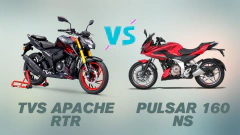
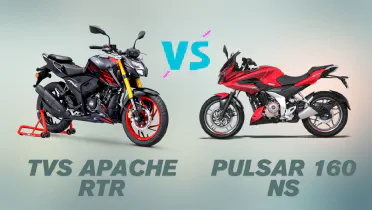
If you want the full price, variant and feature breakdown first, see our TVS Apache RTR 160 buying guide. For how it stacks up against its closest rival, read the RTR 160 vs Pulsar 160 NS comparison. And if you are still deciding which Apache to buy, our TVS Apache models guide covers the whole range.
Key features and first impressions
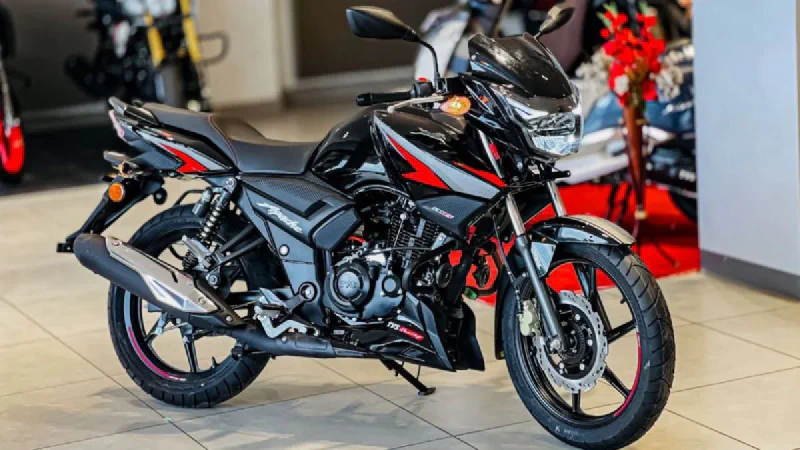
The headline numbers matter. The 4V variant uses a 159.7cc oil-cooled engine making about 17.55 PS (17.31 bhp) and 14.73 Nm, which is plenty for city work and confident highway overtakes. The cheaper 2V runs a 159.7cc air-cooled engine at 16.04 PS and 13.85 Nm. (Prices and specs change often, so confirm at a dealer before buying.)
The current 4V adds the kit that matters day to day:
- USD front forks on the top trim for a more planted front end
- A fully digital console with Bluetooth for navigation and call alerts
- Glide Through Technology, which lets the bike crawl in traffic without constant clutch work
Colours include Matte Black, Pearl White and Racing Red. At a kerb weight of roughly 140 kg, it is light enough to filter through traffic yet stable at speed. Top speed is around 114 kmph, but it is happiest cruising at 90 to 100 kmph. New riders tend to find it forgiving; experienced ones get a genuinely eager engine.
For the official spec sheet, see the TVS Apache RTR 160 4V page.
Real-world mileage: city vs highway
TVS quotes an ARAI figure of around 61 kmpl, which, as with every bike, is a lab number. Owner reports paint a more useful picture.
City: in stop-go traffic, expect roughly 40 to 45 kmpl, dropping towards 38 kmpl with a heavy throttle hand, and closer to 45 kmpl if you keep revs sensible. With a 12-litre tank, that is comfortably a week of typical 40 to 50 km daily commutes between fills.
Highway: at a steady 75 to 80 kmph, owners commonly report the high 40s to around 50 kmpl, slipping to the mid-40s when sitting at 100 kmph for overtakes.
Wind, pillion load and road quality all move the needle, and broken state highways can cost several kmpl. Mixed riding settles around 45 to 50 kmpl, which is competitive for the segment. Note that most current bikes run on E20 petrol now, which can slightly affect mileage; you can check what that means for your model with our E20 fuel compatibility checker.
Comfort: short riders to long hauls
Seat height is about 790 mm, low enough that shorter riders generally manage flat feet at signals without trouble. The riding posture is upright with a slight forward lean: relaxed enough for the city, engaged enough to enjoy a twisty road.
The seat is reasonably cushioned for rider and pillion, though firmness shows up after a couple of hours non-stop. Vibrations are well controlled below about 70 kmph and become more noticeable higher up, mostly through the mirrors. The USD-fork setup on the current model handles bad surfaces well and is hard to bottom out on typical broken roads.
For longer rides it is more capable than its commuter billing suggests. Owners report comfortable 300 to 400 km days solo; with a pillion and luggage, an aftermarket backrest and soft luggage make a real difference.
Handling and touring
Handling is the Apache’s strong suit. The chassis is agile, which makes filtering through city traffic easy, and it holds a confident line at 90 kmph on the highway. The top variants get dual-channel ABS, which adds reassurance under hard braking.
It is not a dedicated tourer, but for weekend trips it copes well: smooth power for climbs, a crisp 5-speed gearbox, and strong top-end pull for overtakes. Above 100 kmph the lack of wind protection is the main limit, so a small windscreen helps on regular highway runs. On dusty, sustained high-rev runs the engine can run warm despite the oil cooler, so plan breaks. Under-seat storage is minimal, but saddlebags fit fine.
Maintenance and ownership
TVS specifies periodic service at regular intervals (typically around every 5,000 km or six months, with earlier first services; confirm your variant’s exact schedule in the owner’s manual). Owners commonly report roughly ₹800 to ₹1,200 per service at authorised centres including oil changes, and about ₹4,000 to ₹5,000 a year all in. The service network is wide, reaching well into tier-2 towns.
On reliability, early Apache generations drew occasional complaints about chain noise and minor electrical niggles; the current bike is noticeably more refined. Parts are inexpensive and widely stocked, and resale holds up well, which the buying guide covers in detail.
Pros and cons
Pros
- Eager engine with strong pickup for both city and highway
- Competitive fuel efficiency for the class
- Sharp, sporty styling
- Comfortable for daily commuting and moderate touring
- Affordable upkeep and solid resale
Cons
- Vibrations creep in at higher speeds
- Seat firms up on very long stints
- Limited storage for touring gear
- Rear suspension could be plusher on rough roads
Is the Apache RTR 160 right for you?
For a rider who wants one efficient, fun, well-supported bike for daily commuting that can still handle the occasional weekend run, the RTR 160 is an easy recommendation, and the 4V is the variant to have for its extra refinement. If your riding is almost all highway and touring, look at the bigger Apaches in our models guide. Prices and specs move often, so confirm the current on-road price and your variant’s features at a dealer before buying.