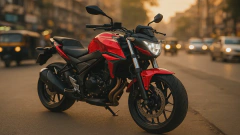


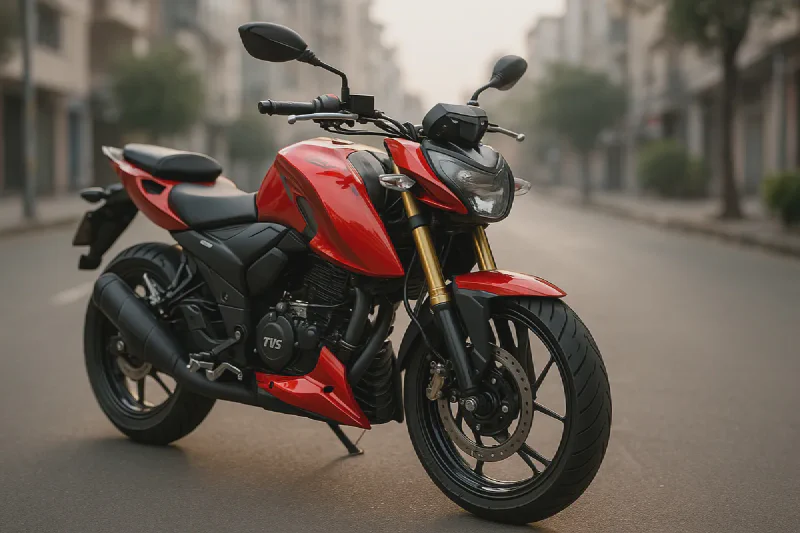
The TVS Apache RTR 200 4V is the bike most young riders mean when they say they want their “first fast bike”. It is quick enough to be genuinely exciting, still light and friendly in traffic, and it costs a lot less than a 250 or 300. This guide gives you the real ex-showroom price, the mileage you will actually see, an honest call on which of the four variants is worth paying for, and a clear answer to the question a lot of people still type into Google: what happened to the “Race Edition 2.0”?
Prices here are ex-showroom and move often, so treat them as a guide and confirm the on-road figure at a TVS dealer before you book. Where this bike sits against the rest of the line-up is covered in our TVS Apache models guide.
The short answer
- Price: about ₹1.41 lakh to ₹1.50 lakh ex-showroom, across four variants.
- Engine: 197.75cc, oil-cooled, single-cylinder, making around 20.8 PS and 17.25 Nm.
- Real mileage: roughly 38 to 42 kmpl in mixed riding (ARAI claims about 37 kmpl).
- Best variant to buy: the one with the golden upside-down (USD) front forks. It is only a little more than the base bike and it is the version most people actually want.
- Skip: paying the full premium for the TFT-screen variant unless you specifically want built-in smartphone connectivity and navigation. The screen is the main thing that money buys.
- Buy it if: you want real performance and the Apache look without stepping up to ₹2 lakh-plus money. If your riding is mostly city commuting, read the running-cost section before you decide.

What happened to the “Race Edition 2.0”?
This trips a lot of buyers up, so let us clear it up first.
“Race Edition 2.0” was the name TVS used around 2017 to 2018 for the updated RTR 200 4V that introduced the slipper clutch, the ride modes and Glide Through Traffic. It was a real badge on a real bike at the time. Over the following years TVS quietly dropped the “Race Edition” suffix and now simply sells the motorcycle as the Apache RTR 200 4V, split into variants by features (forks, display, ABS). The features that made the Race Edition special have carried forward into today’s higher trims.
So if you are searching for the “RTR 200 4V Race Edition 2.0”, the bike you actually want to look at is the current Apache RTR 200 4V below. One warning: some older listing sites still show a price of around ₹96,000 to ₹1.05 lakh against the “Race Edition 2.0” name. That is a stale figure from 2018 and is not what you will pay today. The real, current price is ₹1.41 lakh and up.
TVS Apache RTR 200 4V price and variants
There are four variants. The exact names and prices shift from time to time and vary by city, so the numbers below are approximate ex-showroom guides, ordered from cheapest to dearest.
| Variant | What it adds | From (ex-showroom, approx) |
|---|---|---|
| Dual-Channel ABS | Telescopic front forks, LCD console, ride modes, slipper clutch, dual-channel ABS | ₹1.41 lakh |
| USD Forks | Golden upside-down front forks for better feel and the signature look | ₹1.43 lakh |
| TFT Cluster | Colour TFT display with SmartXonnect Bluetooth connectivity and navigation | ₹1.48 lakh |
| Special / Anniversary Edition | Special paint and badging | ₹1.50 lakh |
On-road, after RTO and insurance, expect roughly ₹1.60 lakh to ₹1.80 lakh depending on your city and the variant. Prices change with offers and local taxes, so check the latest at the dealer before you commit.
Which variant should you buy?
Here is the honest call, because this is where the brochure will not help you.
The USD Forks variant is the sweet spot. For only a couple of thousand rupees more than the base Dual-Channel ABS bike, you get the golden upside-down front forks. They sharpen up the front-end feel and they are also, frankly, the look most people buy this bike for. If your budget stretches at all past the base price, put it here.
The TFT Cluster variant is the one to think hardest about. It adds a colour screen with smartphone connectivity, call and message alerts and turn-by-turn navigation, but it costs roughly ₹6,000 to ₹7,000 more than the USD variant, and the screen is most of what that money buys. If you genuinely want navigation on the dash and Bluetooth, it is worth it. If you do not, the USD variant gives you the same engine, the same forks and the same performance for less.
The Special or Anniversary editions are mostly paint and badging. Pay the small premium only if you love the colour, not because you expect more bike.
There is no bad variant here. They share the same 197.75cc engine, slipper clutch and dual-channel ABS, so even the base bike is the full RTR 200 4V experience. You are only choosing forks and a screen.
Engine, performance and mileage
The 197.75cc oil-cooled single makes around 20.8 PS at 9,000 rpm and 17.25 Nm at 7,250 rpm, paired with a 5-speed gearbox and an A-RT slipper clutch. Top speed is about 127 to 129 kmph. It is not the most powerful bike in its price band, but it is one of the lightest and most flickable, which is what makes it fun in the real world rather than just on paper.
The three ride modes (Sport, Urban and Rain) change throttle response and, on ABS variants, the brake intervention. Sport is the one you will leave it in.
On mileage, the ARAI claim is about 37 kmpl. In normal mixed riding most owners see 38 to 42 kmpl, dropping towards the high 30s if you use the performance often. That is reasonable for a sporty 200, though clearly thirstier than a 160-class commuter, which matters if you ride a lot. With the 12-litre tank, a realistic tankful is good for roughly 450 to 500 km.
What it actually costs to run
Performance bikes are cheap to buy and then surprise you at the pump, so do this maths before you choose. At a petrol price of around ₹100 per litre:
- RTR 200 4V at about 40 kmpl works out to roughly ₹2.5 per km.
- For comparison, the Apache RTR 160 4V at about 47 kmpl works out to roughly ₹2.1 per km.
Over 1,000 km a month that is a difference of about ₹400, or close to ₹5,000 a year, before you add the slightly higher service and tyre costs of the bigger bike. None of this is a reason to avoid the 200 4V. But if your riding is almost entirely city commuting, the 160 4V will save you real money, and you should weigh that honestly against the extra punch.
Most current bikes, this one included, are tuned to run on E20 petrol now. If you are unsure what that means for fuel and mileage, check your model with our E20 fuel compatibility checker.
How it compares to its rivals
- Bajaj Pulsar NS200: more peak power (around 24 PS) and a bit more outright pace, but heavier and generally less refined than the Apache. Choose it if straight-line punch is your priority.
- Honda Hornet 2.0: smoother and more relaxed, but down on power and the least sporty of the three. Choose it if you value refinement and easy manners over outright excitement.
- TVS Apache RTR 200 4V: the middle path, lightest of the group, sharpest handling, strong features (slipper clutch, ride modes, dual-channel ABS) for the money. The all-rounder of the trio.
Within the Apache family itself, the closest decisions are below it and above it. Drop to the RTR 160 4V if running cost and city ease matter more than performance, or stretch to the RTX 300 only if you genuinely want a comfortable tourer for weekend highway runs. If you are also eyeing the smaller naked’s main rival, our RTR 160 vs Pulsar 160 NS comparison runs the same honest logic one class down.
TVS Apache RTR 200 4V FAQs
What is the price of the TVS Apache RTR 200 4V in India? About ₹1.41 lakh to ₹1.50 lakh ex-showroom across its four variants. On-road, expect roughly ₹1.60 lakh to ₹1.80 lakh depending on city and variant.
What is the real mileage of the Apache RTR 200 4V? Around 38 to 42 kmpl in mixed riding, dropping towards the high 30s if you ride hard. The ARAI claim is about 37 kmpl.
Is the Apache RTR 200 4V Race Edition 2.0 still on sale? Not under that name. “Race Edition 2.0” was the 2017 to 2018 badge for the updated RTR 200 4V. TVS dropped the suffix and now sells the same bike simply as the Apache RTR 200 4V, with its features carried into the higher variants.
Which RTR 200 4V variant is the best buy? The USD Forks variant. It costs only a little more than the base bike and adds the golden upside-down forks that improve the front-end feel and give the bike its signature look. Pay up for the TFT variant only if you specifically want the screen and smartphone connectivity.
Is the RTR 200 4V good for daily use? Yes, it is light and easy in traffic. Just remember it returns less than a 160-class commuter, so if your riding is almost all city, the RTR 160 4V will be cheaper to run.
The bottom line
The TVS Apache RTR 200 4V remains the classic value pick for a first performance bike: light, sharp, well-equipped and fun, without ₹2 lakh-plus money. Buy the USD Forks variant for the best mix of price and feel, add the TFT screen only if you actually want it, and go in clear-eyed about the running cost if you mostly commute. And if you arrived here looking for the “Race Edition 2.0”, this is the bike you wanted, just under its current name.
For the full picture of where it sits against every other Apache, from the budget RTR 160 to the faired RR 310, see our TVS Apache models guide.