

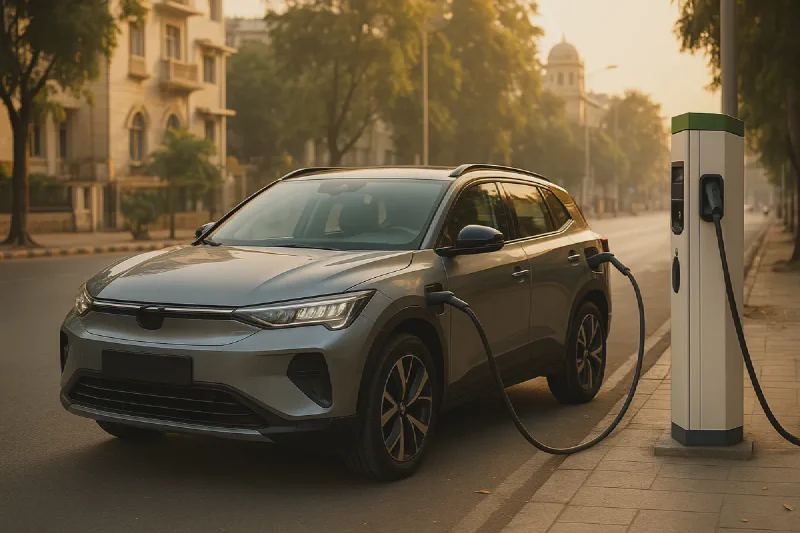
If you are about to buy an electric car in India, the hardest part is not choosing a model. It is deciding whether to buy what is on sale today or wait a few months for something better. The EV market here is moving fast, and a lot of the “upcoming” cars you read about are either already on sale or still a year away.
This page sorts that out. Below is the honest list of electric cars genuinely coming to India through 2026, with expected prices, range, and our straight verdict on each one: wait for it, or skip it. We update this page as launch dates and prices are confirmed, so check the “last updated” note before you decide.
Prices and dates change fast. Every figure below is the manufacturer’s expected or claimed number until launch. Confirm the on-road price and range with the dealer before you book.
The short answer (if you are in a hurry)
- The big one just launched: the Tata Sierra EV went on sale in June 2026 from ₹18.79 lakh, with a claimed range of up to around 665 km. If this is the car you were holding out for, the wait is over, it is in showrooms now.
- Still worth waiting for: the Mahindra BE.07 (the bigger BE.6, expected late 2026) and, if you need three rows, the Tata Safari EV (festive season 2026). Both sit at ₹25 lakh plus, so they suit a specific, higher budget.
- Buy now instead of waiting: if you need a car in the next two to three months and your budget is ₹13 to 18 lakh, the Maruti e-Vitara and Tata Curvv EV are already on sale and good. Waiting buys you choice, not necessarily a better car at your budget.
- Still far away: the Tata Avinya is a 2027 car. Do not hold your purchase for it.
First, clear up the confusion: these are already on sale
A lot of “upcoming EV 2026” lists still show cars you can walk into a showroom and buy today. That wastes your time, so here is the honest line between launched and upcoming.
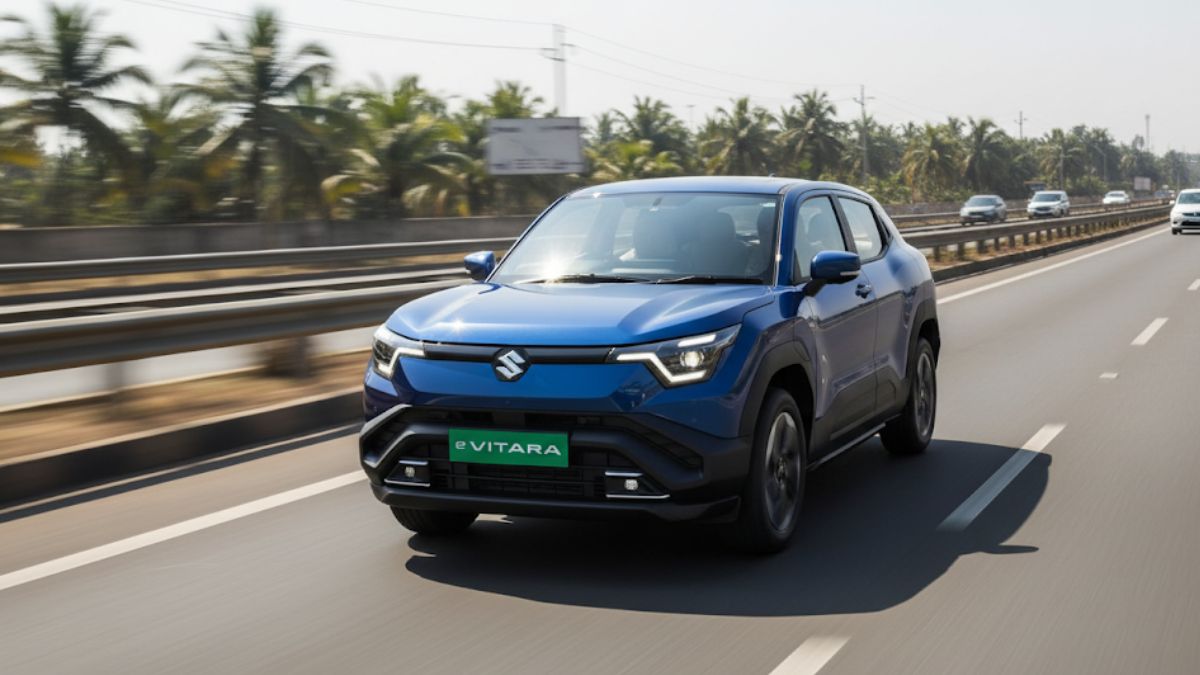
The Maruti e-Vitara is already on sale, not upcoming. If it fits your budget, there is little reason to wait.
| Model | On-road status (July 2026) | Starting price (approx) | Claimed range |
|---|---|---|---|
| Maruti e-Vitara | On sale | ₹15.99 lakh (₹10.99 lakh on battery subscription) | up to 543 km |
| Tata Curvv EV | On sale | ₹16.99 lakh | 502 km |
| Tata Sierra EV | On sale (launched June 2026) | ₹18.79 lakh | up to 665 km |
| Kia Carens Clavis EV | On sale | ₹12.84 lakh (with battery subscription) | 490 km |
| Hyundai Ioniq 5 facelift | On sale (launched April 2026) | ₹55.70 lakh | up to 690 km |
| Tata Nexon EV, Harrier EV, MG Windsor, Mahindra BE.6 | On sale | varies | varies |
If one of these fits, read our deep dives on the Maruti e-Vitara and the Tata Curvv EV before you book. The rest of this page is only about cars you cannot buy yet.
Genuinely upcoming electric cars in India (2026 at a glance)
This table is the cars still to launch. The “Our take” column is the part the spec sheets leave out.
| Model | Expected launch | Expected price | Battery / range (claimed) | Our take |
|---|---|---|---|---|
| Mahindra BE.07 | Late 2026 | ₹25 to 30 lakh | up to ~80 kWh, up to ~450 km | Wait for it if you want a bigger long-range EV |
| Tata Safari EV | Festive season 2026 | around ₹32 lakh | three-row electric SUV | Wait only if you need a big, premium three-row EV |
| Kia Syros EV | 23 July 2026 (expected) | ₹13 to 18 lakh | 42 or 51.4 kWh, up to 526 km | Launching now, Kia’s most affordable EV, worth a look |
| Toyota Urban Cruiser EV | Late 2026 | ₹18 to 25 lakh | 49 to 61 kWh, around 500 km | An e-Vitara twin; compare warranty before choosing |
| Maruti electric MPV (e-Vitara based) | Late 2026 | ₹20 to 25 lakh | 49 to 61 kWh | Wait only if you specifically need 6 to 7 seats |
| VinFast VF6 / VF7 | 2026 | ₹20 lakh plus (expected) | mid-size SUV | New brand in India; let the service network prove itself first |
| Hyundai Inster | Late 2026 | ₹11 to 13 lakh | around 350 to 470 km (global figures) | Watch, the affordable EV of the year if priced right |
| Skoda Elroq | Late 2026 | around ₹45 lakh | 52 to 77 kWh, up to 560 km | Premium European EV; wait if that is your bracket |
| Tata Avinya | 2027 | ₹30 lakh plus | Gen-3 platform | Too far out to plan a purchase around |
The EVs actually worth waiting for
Note that the car most people were waiting for, the Tata Sierra EV, has now launched (June 2026, from ₹18.79 lakh, up to around 665 km claimed). It is on sale, so it has moved into the “already on sale” list above and out of this section. See our upcoming Tata cars in India 2026 guide for the full verdict on it. The genuinely still-to-come EVs worth watching are below.
Mahindra BE.07: the nearest big EV still to come
This is now the most notable mainstream EV still on the way. The BE.07 is the larger sibling of the Mahindra BE.6, on the born-electric INGLO platform, expected around late 2026 at roughly ₹25 to 30 lakh. Expect a bigger body, up to an 80 kWh battery, a claimed WLTP range of up to around 450 km, and the same spaceship-style cabin as the BE.6.
Our take: worth waiting for if your budget is ₹25 lakh plus and you want a bigger long-range electric SUV. It will rival the Tata Harrier EV and the now-on-sale Sierra EV, so compare all three rather than rushing. If you want an electric Mahindra sooner and a slightly smaller car works, the BE.6 is on sale today. Full timeline in our upcoming Mahindra cars in India 2026 guide.
Hyundai Inster: the affordable one
The Inster is Hyundai’s small, boxy electric city car, expected late in 2026 at roughly ₹11 to 13 lakh. Globally it offers two battery options with a claimed range in the region of 350 to 470 km, and in India it is aimed squarely at the Tata Punch EV end of the market. Our take: if Hyundai prices it under ₹12 lakh, this becomes the most interesting affordable EV of the year. Wait for the India price before judging it. Full detail in our upcoming Hyundai cars in India 2026 guide.
Kia Syros EV: the compact option
The Syros EV is Kia’s most affordable electric car, a compact tall-boy SUV launching around 23 July 2026 at an expected ₹13 to 18 lakh. It comes with two battery packs, 42 kWh and 51.4 kWh, with a claimed range of up to 526 km on the bigger one (around 400 to 430 km real). Judge it against the Nexon EV and MG Windsor rather than the bigger Sierra. Our take: a genuinely sensible city and light-highway EV with six airbags across the range and Kia’s assured-buyback safety net. Worth booking if you have home charging, but wait for the on-road price and first reviews. Full detail in our Kia Syros EV price, range and buy-or-wait guide.
Toyota Urban Cruiser EV: basically an e-Vitara
Toyota and Maruti share platforms, and the Urban Cruiser EV is effectively the e-Vitara in a Toyota suit, same 49 to 61 kWh battery options, expected ₹18 to 25 lakh. Our take: the car underneath is already on sale as the e-Vitara, so the only reasons to wait are Toyota’s badge, dealer experience, and warranty terms. Compare those directly. If they do not sway you, just buy the e-Vitara today.
The 2027 cars: do not hold your purchase for these
The premium Tata Avinya and the larger Avinya X are 2027 stories. They look exciting, but a year-plus is too long to leave yourself without a car, and EV prices and offers move enough that planning around an unconfirmed 2027 launch rarely pays off. Note them, do not wait for them. Nearer term, the Tata Safari EV (festive season 2026, around ₹32 lakh) and the Mahindra BE.07 (late 2026) are the big EVs still genuinely due this year.
Buy now or wait? A simple way to decide
The honest framework, because “wait” is not always the right answer:
- Buy now if you need a car within three months, your budget is ₹13 to 18 lakh, and an on-sale EV like the e-Vitara, Curvv EV or Windsor already fits. Waiting mostly adds choice at higher price points, not a better car at yours.
- Wait if your budget is ₹25 lakh or more and you want the Mahindra BE.07 or the three-row Tata Safari EV specifically, both still due late in 2026. For the Sierra EV there is nothing to wait for anymore, it is on sale, though reading real-world range and ownership reports before you book is still smart.
- Do not wait if the car you want is a 2027 launch like the Tata Avinya. The gap is too long and too uncertain.
Still weighing electric against a strong-hybrid that needs no charging? Read our best hybrid cars in India guide before you lock in an EV, the running-cost math there is the other half of this decision.
Running cost and road tax: the real reason EVs are cheaper to own
The sticker price is only part of the story. Most states in India still offer lower or zero road tax on electric cars, which can save you a meaningful amount versus a petrol equivalent at the same price. That saving changes by state, so check it for your registration before you compare on-road prices.
Use our Road Tax Calculator to see what you would actually pay in your state, then compare the real running cost against petrol. On electricity at home, most of these EVs cost a fraction of petrol per kilometre, which is what closes the gap over three to four years of ownership.
If you are cross-shopping with petrol cars at a similar budget, our Top 10 cars under ₹15 lakh and best SUVs under ₹10 lakh guides give you the non-EV comparison, and the safest cars in India list shows how the EVs score on Bharat NCAP.
By budget: what to wait for, and what to buy today
- Around ₹11 to 16 lakh: buy now if a car on sale fits. The Maruti e-Vitara and Kia Carens Clavis EV are already here. The “wait” candidates in this band are the Hyundai Inster (₹11 to 13 lakh expected, late 2026) and the Kia Syros EV.
- Around ₹18 to 25 lakh: the headline car here, the Tata Sierra EV, has now launched (from ₹18.79 lakh), so you can buy rather than wait. Still to come in this band are the Toyota Urban Cruiser EV and the e-Vitara-based MPV, both late 2026.
- ₹40 lakh and above: the Skoda Elroq is the premium upcoming option. The Hyundai Ioniq 5 facelift launched in April 2026 at ₹55.70 lakh with a claimed 690 km, so that one you can buy today.
Looking at two wheels instead? The most-awaited upcoming electric two-wheeler is the Ultraviolette Tesseract, a premium electric scooter with a claimed 261 km range, though it has faced repeated delays, so read our buy-or-wait verdict before you book.
How we keep this page current
EV launches in India slip and shift constantly. We refresh this page as dates firm up, prices are announced, and cars move from “upcoming” to “on sale.” When a model launches, it moves out of the upcoming table and into a full review. Bookmark it and check the date below before you make a call.
Last updated: July 2026.
FAQ
Which is the most awaited upcoming electric car in India in 2026? The most awaited one, the Tata Sierra EV, has now launched (June 2026, from ₹18.79 lakh, up to around 665 km claimed), so it is on sale rather than upcoming. Among EVs still to come in 2026, the biggest are the Mahindra BE.07 (late 2026, around ₹25 to 30 lakh) and the three-row Tata Safari EV (festive season 2026, around ₹32 lakh).
Is the Maruti e-Vitara still upcoming? No. The Maruti e-Vitara is already on sale in India, from ₹15.99 lakh ex-showroom (or ₹10.99 lakh on Maruti’s battery-subscription plan), with a claimed range of up to 543 km. If it fits your budget, there is little reason to wait for something else.
Should I wait for an upcoming EV or buy one now? Buy now if you need a car within three months and an on-sale EV fits your budget, especially since the Tata Sierra EV has now launched too. Wait only if your budget is ₹25 lakh plus and you specifically want the Mahindra BE.07 or the three-row Tata Safari EV, both due late in 2026. Do not wait for far-off 2027 cars like the Tata Avinya.
What is the cheapest upcoming electric car in India in 2026? Among the newest models, the Kia Syros EV is one of the most affordable at an expected ₹13 to 18 lakh, launching around 23 July 2026. Cheaper EVs like the Maruti e-Vitara and Kia Carens Clavis EV are already on sale.
Do electric cars pay road tax in India? Most states charge lower or zero road tax on EVs, though it varies by state. Use our Road Tax Calculator to check what you would actually pay where you register.